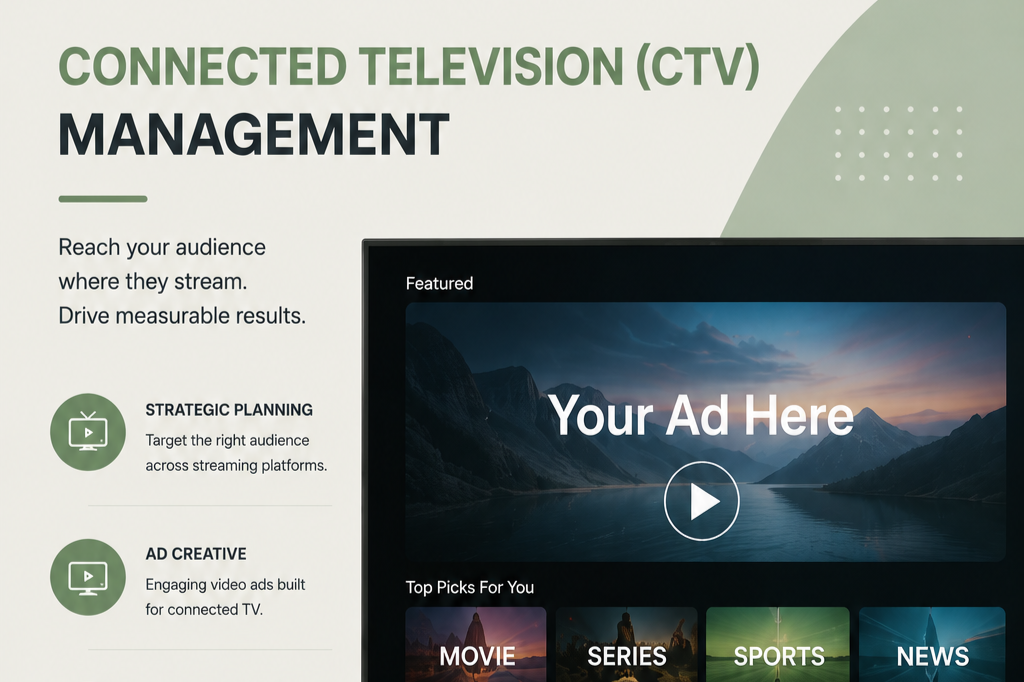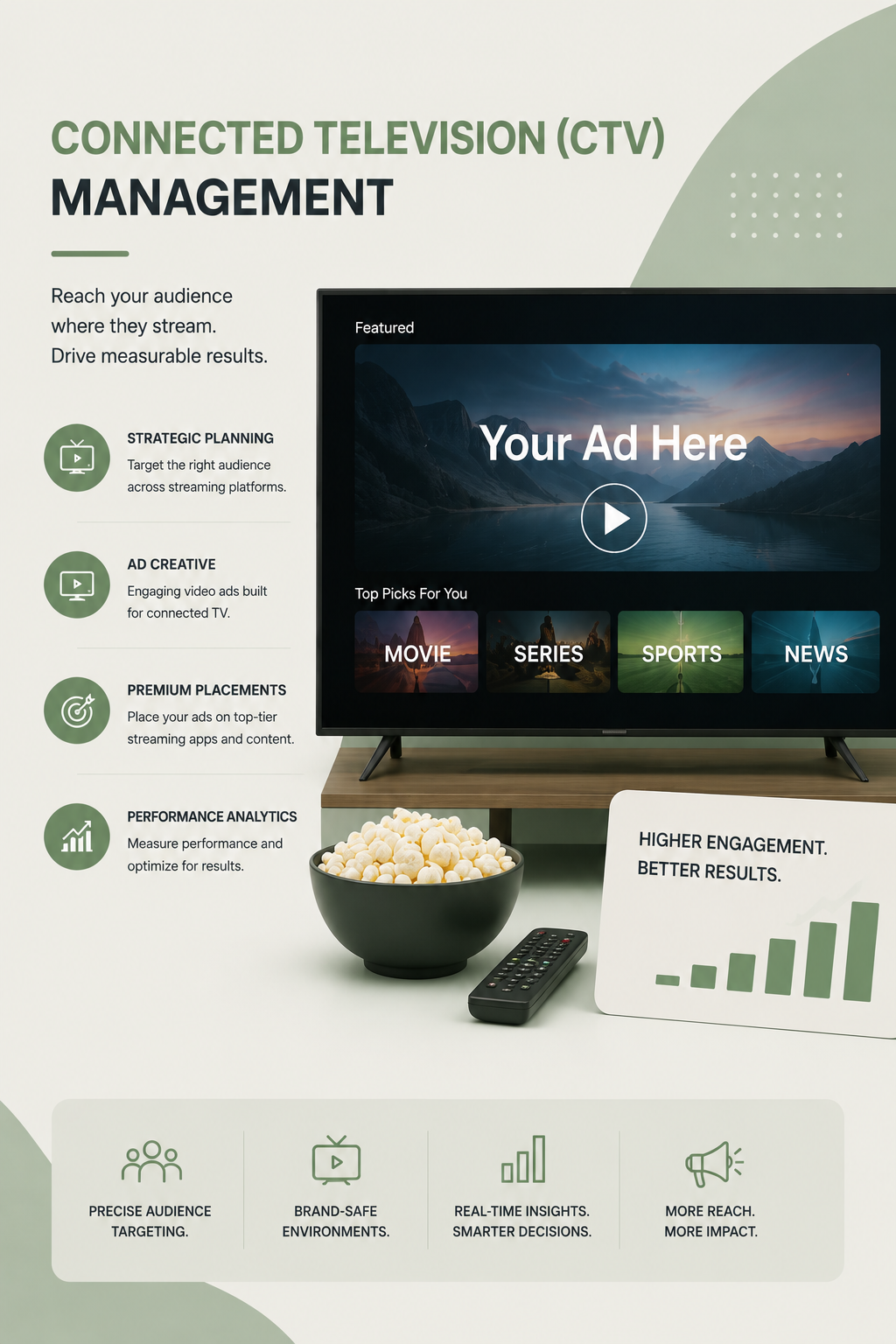
Connected Television (CTV) refers to internet-enabled TV devices that stream digital video content, including smart TVs, streaming devices (e.g., Roku, Fire TV), gaming consoles, and apps on linear TVs. CTV has become a core component of modern media strategies as audiences continue shifting away from traditional broadcast and cable television.
Market Dynamics
CTV viewership is growing rapidly, driven by cord-cutting, increased streaming subscriptions, and broader access to smart TV devices. Advertisers are reallocating budgets from linear TV to CTV to follow audiences and achieve more precise targeting and measurement.
Strategic Value
CTV combines the brand impact of traditional television with the data-driven capabilities of digital advertising. Key advantages include:
Advanced targeting using household, demographic, and behavioral data
Measurable performance through impressions, completion rates, and attribution
High engagement due to full-screen, non-skippable ad formats
Premium content environments across major streaming platforms
Challenges
Despite its growth, CTV presents challenges such as fragmented platforms, inconsistent measurement standards, frequency management, and concerns around transparency and fraud. Effective governance and trusted partners are critical to mitigate these risks.
Business Impact
CTV is now a strategic channel for brand building and performance marketing. Organizations that invest in CTV capabilities—data integration, creative optimization, and cross-channel measurement—are better positioned to improve reach, efficiency, and return on ad spend.
Outlook
CTV is expected to continue expanding as technology, measurement standards, and programmatic capabilities mature. It will play a central role in omnichannel media strategies, increasingly converging with linear TV and digital video ecosystems.